SodaSlim Official Website › SodaSlim Ingredients
SodaSlim IngredientsSodaSlim Ingredients: All Five Actives And What Each One Is For
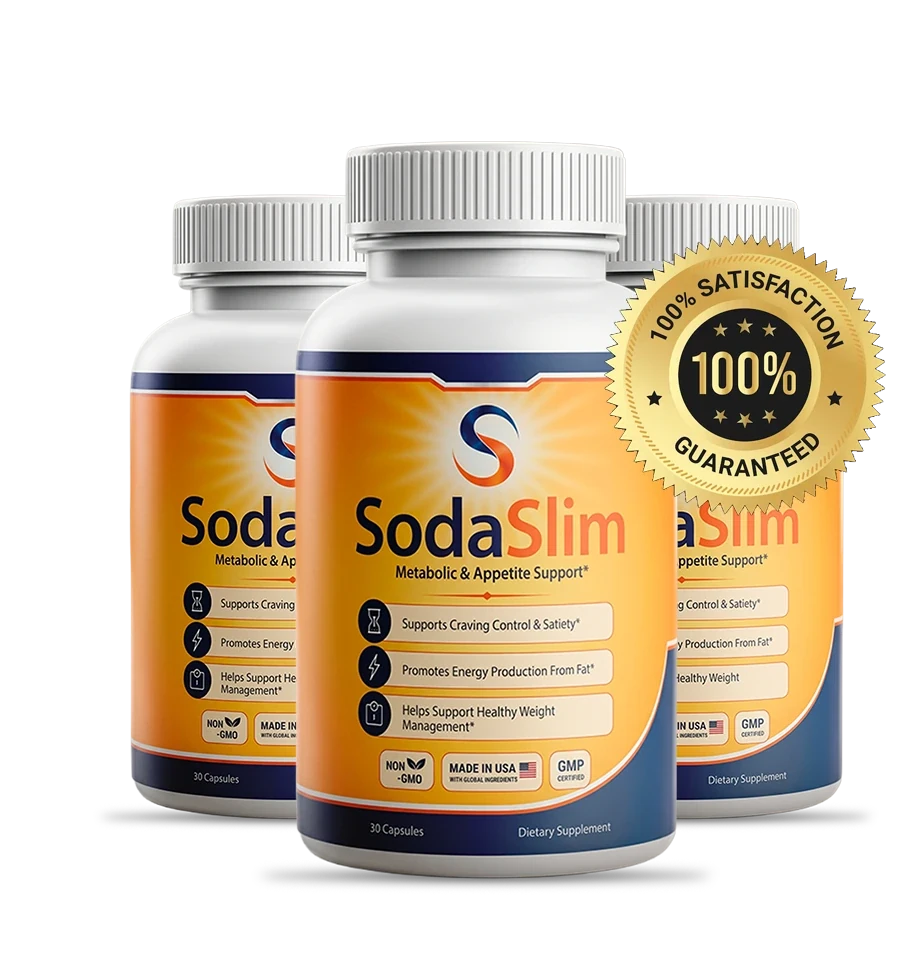
SodaSlim names five actives on its front panel and prints an amount for none of them.
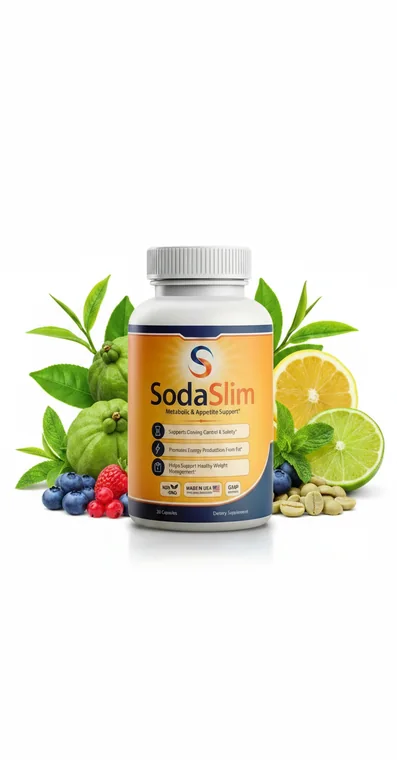
They are caffeine anhydrous, green coffee bean extract, raspberry ketone, garcinia extract and green tea extract. Four carry substantial human literature and one has no randomised human trial at all. This page takes each in turn and prints the amount its own trials used.
The order below follows the front panel. Every citation is a real paper, checked against the PubMed record the week this page was written.
What is in a SodaSlim capsule?
Caffeine Anhydrous
dried caffeine powderAmount on the label: none printedThe most researched compound in this formula and the only one that does anything within the hour. It raises alertness by blocking adenosine, and it raises resting energy expenditure by a modest amount that is easy to measure and easy to over-sell. A dose-response meta-analysis of thirteen randomised trials in 606 people reported that doubling caffeine intake was associated with roughly a fifth more reduction in weight, body mass index and fat mass.
The trials that measured energy expenditure directly used real amounts. One double-blind crossover study gave 5 mg per kilogram of body weight a day, which for an 80 kg adult is 400 mg: about four strong cups of coffee. The review behind the commonly quoted 400 mg a day figure for healthy adults treats that as a total across every source, which is the arithmetic an unstated capsule makes impossible.
Tolerance matters here and the label does not mention it. A habitual coffee drinker starting this capsule is adding to an already adapted system, and the thermogenic response is smaller in that group than in somebody who drinks none.
Green Coffee Bean Extract
Coffea arabica, unroasted seedAmount on the label: none printedCoffee beans that have not been roasted keep far more of their chlorogenic acid, which is the compound this extract is standardised for and the reason it is in the bottle. The proposed mechanism is slower glucose absorption from a meal, with a secondary story about fat oxidation.
The 2023 systematic review and meta-analysis pooled three randomised trials, 103 people in total, of green coffee extract carrying at least 500 mg of chlorogenic acid a day. It found a mean weight reduction of 1.3 kg with no heterogeneity between the studies and no sign of publication bias. That is a modest, honest result on a small base, and it is attached to a number. A separate eight-week trial gave 400 mg a day of the extract alongside an energy-restricted diet.
This ingredient also carries the cautionary tale of the whole category. The 2012 crossover study that made green coffee famous reported 8 kg of loss on 16 people at 700 and 1,050 mg, went on daytime television, and was retracted by its journal two years later. NCBI still returns it with the publication type Retracted Publication. If you have heard that green coffee produces dramatic results, that is the study you heard about.
What survives the retraction is smaller and more believable: a review of the blood-pressure claim and a meta-analysis of cardiovascular risk markers both find measurable but modest effects, and the mouse work the ingredient story started from remains mouse work.
Raspberry Ketone
4-(4-hydroxyphenyl)butan-2-oneAmount on the label: none printedThis is the ingredient this desk cannot support, and saying so is the only honest way to write this panel. A search of the published literature for raspberry ketone and human body weight returns reviews, cell work and animal studies. It does not return a randomised controlled trial of the compound in people, because there is not one.
What exists is suggestive and it is all pre-clinical. A 2017 study in 3T3-L1 cells and ovariectomised rats found reduced lipid accumulation through an autophagy mechanism. A 2022 review and a 2021 pharmacological review both describe plausible metabolic activity and both note the absence of clinical data.
The most useful study is the one that failed. A mouse trial on a high-fat diet compared raspberry ketone at 0.25 and 1.74 per cent of the diet by weight against a pair-fed group eating the same amount of food. The ketone did not reduce adiposity beyond the effect of the reduced food intake it caused. In other words, what looked like fat loss was the animals eating less.
Its presence in the capsule is not a reason to avoid the bottle. It is a reason not to buy the bottle for this ingredient, and a reason to treat any page that leads with it as marketing.
Garcinia Extract
Garcinia cambogia, rindAmount on the label: none printedThe source of hydroxycitric acid, which competitively inhibits ATP-citrate lyase, an enzyme involved in turning carbohydrate into fat. It is also sold for satiety. The mechanism is real biochemistry; the question is whether it produces anything measurable in a person.
The largest and best-known trial put 135 overweight adults on a high-fibre, low-energy diet for twelve weeks and gave half of them 1,500 mg of hydroxycitric acid a day and half a placebo. Weight came off in both arms. Statistically the two arms were indistinguishable, on fat mass as well as on weight.
A 2020 dose-response meta-analysis of eight trials in 530 people found a pooled reduction of 1.34 kg, which is a positive result and a small one. The main safety overview of the standardised extract was written by researchers with a commercial interest in it, which is worth knowing when reading its conclusions.
Garcinia is also the ingredient most often named in the liver-injury literature for this category. A systematic review of herb-induced liver injury and a review of supplement-related liver injury both discuss weight-loss products containing it. The cases are rare and the amounts involved are generally far above anything a once-daily capsule would carry, which is the sort of reassurance a printed figure would let this desk give properly.
Green Tea Extract
Camellia sinensis, leafAmount on the label: none printedConcentrated catechins, chiefly epigallocatechin gallate, usually with some of the leaf's own caffeine alongside. The proposal is that catechins and caffeine together raise energy expenditure by more than caffeine alone.
A meta-analysis of catechin and caffeine mixtures found a mean reduction of 1.31 kg, with the effect blunted in people already taking more than 300 mg of caffeine a day. That last detail is the one worth carrying away from this whole page: the two stimulant ingredients in this bottle compete with the coffee already in your morning.
The Cochrane review is less generous. Pooling six trials conducted outside Japan in 532 people, it found a mean difference of 0.04 kg and concluded that green tea preparations produce a small, statistically non-significant loss that is unlikely to be clinically important. A 2024 meta-analysis looked at whether catechins add anything to exercise training.
Concentrated extract is also where this formula's only real safety literature sits. A systematic safety review proposed an intake level of 338 mg of EGCG a day taken as a bolus, with an observed safe level of 704 mg, and a randomised trial at 843 mg a day for six to nine months examined liver enzymes directly. An analysis of what green tea supplements actually contain found wide variation between label claim and measured content across commercial products, which is a general finding about the category rather than about this bottle.
Where the SodaSlim label and the published research part company
The right-hand column is a measuring stick, not a verdict. Nobody outside the manufacturer knows what is in the capsule, so nothing here says the amounts are too small. What it does say is that four of these five ingredients have a published amount attached to whatever effect they have, and a buyer holding this bottle cannot check theirs against it.
There is a fifth row with a different problem. Raspberry ketone has no human amount to print, because it has no human trial. That is a gap in the literature rather than a gap in the label, and it belongs to the ingredient wherever it is sold.
How SodaSlim ingredients behave together
Two of the five are stimulants, and they are the two that interact. Caffeine anhydrous is caffeine on its own; green tea extract brings catechins and usually some leaf caffeine with them. The meta-analysis of catechin and caffeine mixtures found the combination's effect shrinks in people already consuming more than 300 mg of caffeine a day, which is three strong coffees.
That produces a genuinely useful piece of advice, and it is the only practical thing this page can tell you that the label cannot. If you drink a lot of coffee, this capsule is likely to do less for you than it does for somebody who drinks none, and it will still contribute the same unknown amount of stimulant to your day. Reducing the coffee rather than adding the capsule on top is the sensible sequence.
The other three do not compete in any documented way. Chlorogenic acid acts on carbohydrate absorption, hydroxycitric acid on an enzyme in fat synthesis, and raspberry ketone on mechanisms that have only been observed in cells and animals. Nothing in the literature suggests any of the three interferes with the others.
Anyone taking a medicine whose dose is adjusted against blood glucose has a reason to mention chlorogenic acid, because slowing glucose absorption is exactly what it is proposed to do. That is a conversation to have before the first capsule, not after the first surprising reading.
What SodaSlim does not contain
The front panel prints three marks: non-GMO, made in the USA with global ingredients, and GMP certified. The vendor's wider seal set adds gluten free, vegetarian, natural ingredients, FDA-registered facility and doctor formulated. Those eight marks are audited one by one on the testing and quality page, including the two that name nobody and certify nothing.
What the artwork does not carry is an allergen statement, an other-ingredients line or a capsule-shell declaration. A buyer who needs to know whether the shell is gelatin or cellulose should ring the order desk and ask before ordering, because this desk will not guess at it in writing.
- Not a gummy, not a powder and not liquid drops. A capsule.
- Not a multivitamin. There are no vitamins or minerals on this panel.
- Not a meal replacement and not a source of fibre.
- Not a prescription medicine, and not an alternative to one.
SodaSlim ingredients: common questions
How much caffeine is in SodaSlim?
The artwork carries no Supplement Facts panel, so there is no figure to quote from the bottle, the seller's page or the batch paperwork. Treat the capsule as an unknown quantity of caffeine rather than a small one, and keep the rest of the day's intake where it already was.
Which SodaSlim ingredient has the strongest evidence?
Caffeine, by a distance, and it is not close. Green tea catechins and chlorogenic acid from green coffee both have randomised trials with small positive results. Garcinia has a large trial that found nothing. Raspberry ketone has no randomised human trial at all.
Is raspberry ketone the same thing as eating raspberries?
No. The compound is present in raspberries at a few parts per million, so the amount used in any supplement is made synthetically. Eating raspberries is a pleasant thing to do and it is not a way of taking this ingredient.
Does SodaSlim contain a proprietary blend?
The question does not arise, because there is no panel to print a blend in. A proprietary blend at least tells you the total weight of what it hides. This label gives five names and no weights at all.
Sources behind this SodaSlim ingredient review
- Tabrizi R, Saneei P, Lankarani KB, et al. The effects of caffeine intake on weight loss: a systematic review and dose-response meta-analysis of randomized controlled trials. Crit Rev Food Sci Nutr. 2019;59(16):2688-2696. PMID 30335479. https://pubmed.ncbi.nlm.nih.gov/30335479/
- Júdice PB, Matias CN, Santos DA, et al. Caffeine intake, short bouts of physical activity, and energy expenditure: a double-blind randomized crossover trial. PLoS One. 2013;8(7):e68936. PMID 23869233. https://pubmed.ncbi.nlm.nih.gov/23869233/
- Nawrot P, Jordan S, Eastwood J, et al. Effects of caffeine on human health. Food Addit Contam. 2003;20(1):1-30. PMID 12519715. https://pubmed.ncbi.nlm.nih.gov/12519715/
- Kanchanasurakit S, Saokaew S, Phisalprapa P, et al. Chlorogenic acid in green bean coffee on body weight: a systematic review and meta-analysis of randomized controlled trials. Syst Rev. 2023;12(1):163. PMID 37710316. https://pubmed.ncbi.nlm.nih.gov/37710316/
- Haidari F, Samadi M, Mohammadshahi M, et al. Energy restriction combined with green coffee bean extract affects serum adipocytokines and the body composition in obese women. Asia Pac J Clin Nutr. 2017;26(6):1048-1054. PMID 28917230. https://pubmed.ncbi.nlm.nih.gov/28917230/
- Vinson JA, Burnham BR, Nagendran MV. Randomized, double-blind, placebo-controlled, linear dose, crossover study to evaluate the efficacy and safety of a green coffee bean extract in overweight subjects. Diabetes Metab Syndr Obes. 2012;5:21-7. RETRACTED; retraction published Diabetes Metab Syndr Obes. 2014;7:467. PMID 22291473. https://pubmed.ncbi.nlm.nih.gov/22291473/
- Pourmasoumi M, Hadi A, Marx W, et al. The effect of green coffee bean extract on cardiovascular risk factors: a systematic review and meta-analysis. Adv Exp Med Biol. 2021;1328:323-345. PMID 34981487. https://pubmed.ncbi.nlm.nih.gov/34981487/
- Loader TB, Taylor CG, Zahradka P, et al. Chlorogenic acid from coffee beans: evaluating the evidence for a blood pressure-regulating health claim. Nutr Rev. 2017;75(2):114-133. PMID 28130503. https://pubmed.ncbi.nlm.nih.gov/28130503/
- Shimoda H, Seki E, Aitani M. Inhibitory effect of green coffee bean extract on fat accumulation and body weight gain in mice. BMC Complement Altern Med. 2006;6:9. PMID 16545124. https://pubmed.ncbi.nlm.nih.gov/16545124/
- Li X, Wei T, Wu M, et al. Potential metabolic activities of raspberry ketone. J Food Biochem. 2022;46(1):e14018. PMID 34913499. https://pubmed.ncbi.nlm.nih.gov/34913499/
- Rao S, Kurakula M, Mamidipalli N, et al. Pharmacological exploration of phenolic compound: raspberry ketone - update 2020. Plants (Basel). 2021;10(7):1323. PMID 34209554. https://pubmed.ncbi.nlm.nih.gov/34209554/
- Cotten BM, Diamond SA, Banh T, et al. Raspberry ketone fails to reduce adiposity beyond decreasing food intake in C57BL/6 mice fed a high-fat diet. Food Funct. 2017;8(4):1512-1518. PMID 28378858. https://pubmed.ncbi.nlm.nih.gov/28378858/
- Leu SY, Chen YC, Tsai YC, et al. Raspberry ketone reduced lipid accumulation in 3T3-L1 cells and ovariectomy-induced obesity in Wistar rats by regulating autophagy mechanisms. J Agric Food Chem. 2017;65(50):10907-10914. PMID 29164883. https://pubmed.ncbi.nlm.nih.gov/29164883/
- Heymsfield SB, Allison DB, Vasselli JR, et al. Garcinia cambogia (hydroxycitric acid) as a potential antiobesity agent: a randomized controlled trial. JAMA. 1998;280(18):1596-600. PMID 9820262. https://pubmed.ncbi.nlm.nih.gov/9820262/
- Golzarand M, Omidian M, Toolabi K. Effect of Garcinia cambogia supplement on obesity indices: a systematic review and dose-response meta-analysis. Complement Ther Med. 2020;52:102451. PMID 32951714. https://pubmed.ncbi.nlm.nih.gov/32951714/
- Preuss HG, Rao CV, Garis R, et al. An overview of the safety and efficacy of a novel, natural (-)-hydroxycitric acid extract (HCA-SX) for weight management. J Med. 2004;35(1-6):33-48. PMID 18084863. https://pubmed.ncbi.nlm.nih.gov/18084863/
- Ballotin VR, Bigarella LG, Brandão ABM, et al. Herb-induced liver injury: systematic review and meta-analysis. World J Clin Cases. 2021;9(20):5490-5513. PMID 34307603. https://pubmed.ncbi.nlm.nih.gov/34307603/
- Hursel R, Viechtbauer W, Westerterp-Plantenga MS. The effects of green tea on weight loss and weight maintenance: a meta-analysis. Int J Obes (Lond). 2009;33(9):956-61. PMID 19597519. https://pubmed.ncbi.nlm.nih.gov/19597519/
- Jurgens TM, Whelan AM, Killian L, et al. Green tea for weight loss and weight maintenance in overweight or obese adults. Cochrane Database Syst Rev. 2012;12(12):CD008650. PMID 23235664. https://pubmed.ncbi.nlm.nih.gov/23235664/
- Gholami F, Antonio J, Iranpour M, et al. Does green tea catechin enhance weight-loss effect of exercise training in overweight and obese individuals? A systematic review and meta-analysis of randomized trials. J Int Soc Sports Nutr. 2024;21(1):2411029. PMID 39350601. https://pubmed.ncbi.nlm.nih.gov/39350601/
- Hu J, Webster D, Cao J, et al. The safety of green tea and green tea extract consumption in adults - results of a systematic review. Regul Toxicol Pharmacol. 2018;95:412-433. PMID 29580974. https://pubmed.ncbi.nlm.nih.gov/29580974/
- Acosta L, Byham-Gray L, Kurzer M, et al. Hepatotoxicity with high-dose green tea extract: effect of catechol-O-methyltransferase and uridine 5'-diphospho-glucuronosyltransferase 1A4 genotypes. J Diet Suppl. 2023;20(6):850-869. PMID 36178169. https://pubmed.ncbi.nlm.nih.gov/36178169/
- Abourashed EA, Roberson CL, Elsharkawy N. Content variation of catechin markers, total phenolics and caffeine in green tea dietary supplements. J Diet Suppl. 2016;13(2):171-84. PMID 25299974. https://pubmed.ncbi.nlm.nih.gov/25299974/
- Navarro VJ, Khan I, Björnsson E, et al. Liver injury from herbal and dietary supplements. Hepatology. 2017;65(1):363-373. PMID 27677775. https://pubmed.ncbi.nlm.nih.gov/27677775/
Take the SodaSlim ingredient list at its own word count
Five named actives, one capsule a morning and 60 days to decide. The window is attached to the order, which is why it is worth placing here.
From $49 a bottle on six, $79 on two · 60-day money-back guarantee
Go To The SodaSlim CheckoutThirty capsules a bottle · one each morning · batch SOD-26/SO-4211