SodaSlim Official Website › Guides
GuidesMetabolism Supplement Guides: The Ingredients And The Checklist
Two long guides, written with nothing to sell in them.
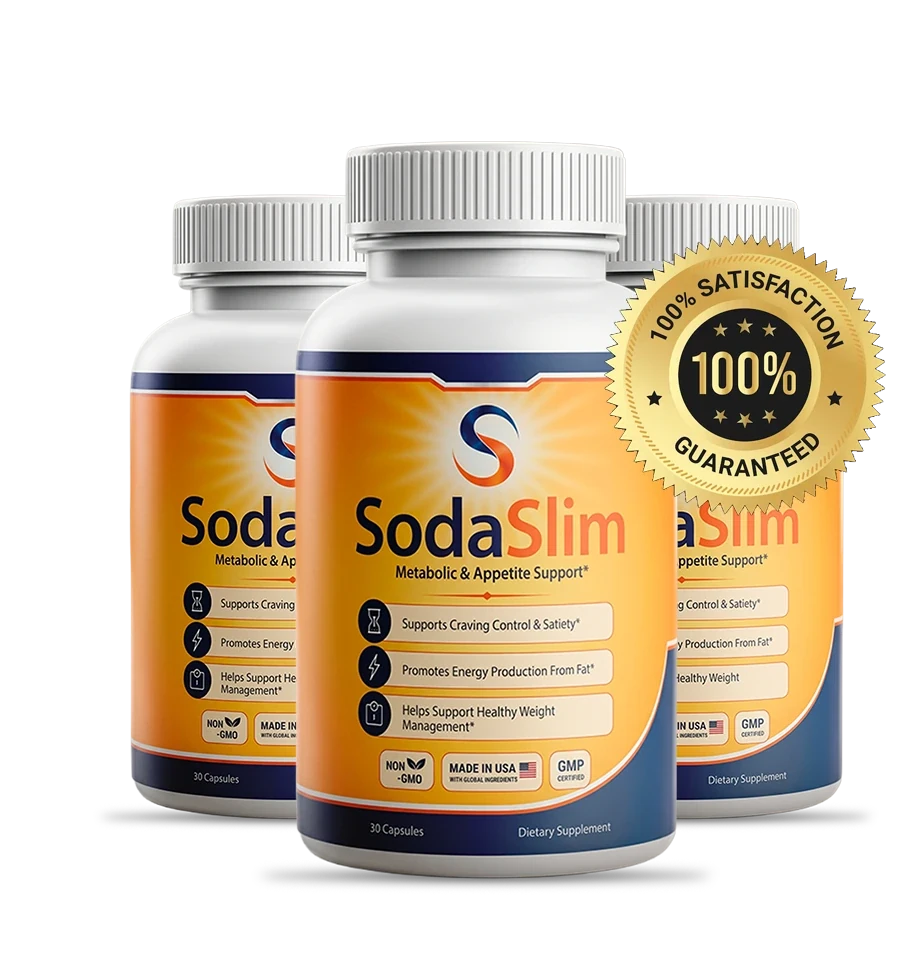
The first explains what the ingredients in this category actually do and what the published trials found when they were tested. The second is a checklist for judging any bottle in the category. It is turned on the bottle sold here in the closing section, with the marking left exactly as it stands.
Both are written from the same sources as the product pages and both cite the papers they rely on.
The two guides
The metabolism supplement guide
What caffeine, chlorogenic acid, hydroxycitric acid, catechins and raspberry ketone are, how each is proposed to work, and what happened when each was tested at a stated amount in people. It is the background reading for every ingredient page on this site.
Choosing a metabolism supplement
Eight things worth checking on any bottle in this category, in the order they are worth checking. The last section scores the product this desk sells against the same eight, and it does not come top of every one.
Why this desk publishes guides at all
A retailer writing a buying guide is an obvious conflict and there is no point pretending otherwise. This desk earns from orders placed through the buttons on this website, and a guide that quietly shaped its criteria around the product it sells would be worth nothing to a reader.
The test of whether that has happened is in the last section of the choosing guide, where the criteria are applied. If a product scored full marks against a checklist written by the people selling it, the checklist would be the thing to doubt. SodaSlim scores badly on the criterion that matters most in this category, which is whether the label prints an amount, and the guide says so in the same words it would use about anybody else's bottle.
The other reason is narrower. Most of what is written about this category online is either a sales page or a listicle assembled from sales pages. A reader who wants to know what chlorogenic acid was actually tested at has to go to the trials, and the trials are behind a search interface most people do not use daily. Putting the amounts in one place is a genuinely useful thing to do and it costs this desk nothing except the sales it loses by being accurate.
What this desk refuses to publish is listed on the about page, which is the other half of the same argument.
How these guides are written
From three sources, kept apart on purpose. The label artwork supplies every fact about the product. The published literature supplies every amount, and each one is linked to the PubMed record it came from rather than quoted from memory. The seller's information page supplies nothing at all except where it agrees with the first two, and where it goes beyond them the difference is stated.
Every citation on both guides was checked against its record during the week they were written. That is a low bar and it is one the category routinely fails: a citation carrying the right identifier with another paper's authors has shipped on real sites, and a retracted paper is still cited approvingly in a great deal of marketing copy written before it was withdrawn.
Where a compound has no human trial, the guide says so rather than substituting an animal study. Where a trial found nothing, the guide reports that it found nothing. And where a famous result has been retracted, the guide cites the retracted paper and labels it, because a reader who has heard the claim needs to be able to trace it.
- The label supplies the facts about the product.
- The literature supplies every amount, linked to its record.
- Animal work is never presented as human evidence.
- A negative trial is reported as a negative trial.
- A retracted paper is cited and labelled, not quietly omitted.
What is in the rest of this site
- The ingredients page: all five actives, each beside the amount its own trials used.
- How it works: the three proposed mechanisms, and which of them is load-bearing.
- Side effects: the stimulant effects and the green tea extract safety literature.
- The results timeline: week by week, against what buyers on this desk reported.
- Testing and quality: all eight vendor seals, audited one at a time.
- The blog: five longer pieces, including the retracted study that made one of these ingredients famous.
What these guides deliberately leave out
Three things, and the reasons are worth stating because their absence is otherwise easy to read as an oversight.
There is no ranked list of products. A retailer publishing a table with its own bottle at the top would be writing an advertisement with a checklist stapled to it, and a retailer publishing one with somebody else's bottle at the top would be doing something stranger still. What the choosing guide offers instead is the criteria, so a reader can rank for themselves.
There is no dosage recommendation for any ingredient. The guides print what the published trials used, which is a statement about the research, and they stop there. Telling a reader how much of a compound to take is a different act from telling them what a trial gave people, and only the second is this desk's to perform.
And there is no discussion of prescription weight-loss medicines. They exist, they work differently and at a different scale, and a comparison drawn by a supplement retailer would be worthless in either direction. Anybody weighing one against a supplement should be having that conversation with a clinician.
- No ranked product table, because a retailer cannot write an honest one.
- No dosage recommendation, only the amounts the published trials used.
- No comparison with prescription medicines.
- No claim about any product this desk has not read the label of.
Who writes these guides
The sources both guides work from, and the desk that writes them.
- Batsis JA, Apolzan JW, Bagley PJ, et al. A systematic review of dietary supplements and alternative therapies for weight loss. Obesity (Silver Spring). 2021;29(7):1102-1113. PMID 34159755. https://pubmed.ncbi.nlm.nih.gov/34159755/
- Saldanha LG, Dwyer JT, Bailen RA, et al. Characteristics and challenges of dietary supplement databases derived from label information. J Nutr. 2018;148(suppl_2):1422S-1427S. PMID 31505680. https://pubmed.ncbi.nlm.nih.gov/31505680/
- Using Dietary Supplements Wisely. National Center for Complementary and Integrative Health, National Institutes of Health. https://www.nccih.nih.gov/health/using-dietary-supplements-wisely
- Dietary Supplements: What You Need to Know. Office of Dietary Supplements, National Institutes of Health. https://ods.od.nih.gov/factsheets/WYNTK-Consumer/